

Safe Tug: How to Play with Your Dog
Many dog owners want to enjoy tug-of-war with their pets but worry about safety or the old myth that tug makes dogs aggressive. If you’ve ever hesitated before picking up a tug o war dog toy, this guide is for you. Here, you’ll learn how to play tug safely, teach your dog reliable rules, and choose the right gear for comfortable, injury-free play.
Safe tug builds trust and self-control—not aggression—when done right. This article gives practical steps and troubleshooting advice to make tug a rewarding, safe game for you and your dog.
Why Tug-of-War Deserves a Second Look
If you were to ask five dog trainers about tug-of-war, you'd likely get five different takes. Some still hold the belief that it "teaches dominance," a notion that's been challenged by years of practical experience and more recent research. Here's the reality:
- Dogs engage in tug-of-war with each other as a natural, cooperative activity.
- When rules are established—such as a "drop it" command—tug can be a useful tool for teaching impulse control.
- Dogs that are allowed to tug in a structured manner frequently display greater focus and less frustration.
Why does this matter? Avoiding tug-of-war out of concern deprives your dog of important mental and physical stimulation. The true danger isn't the game itself, but rather playing without clear guidelines or using unsafe toys.
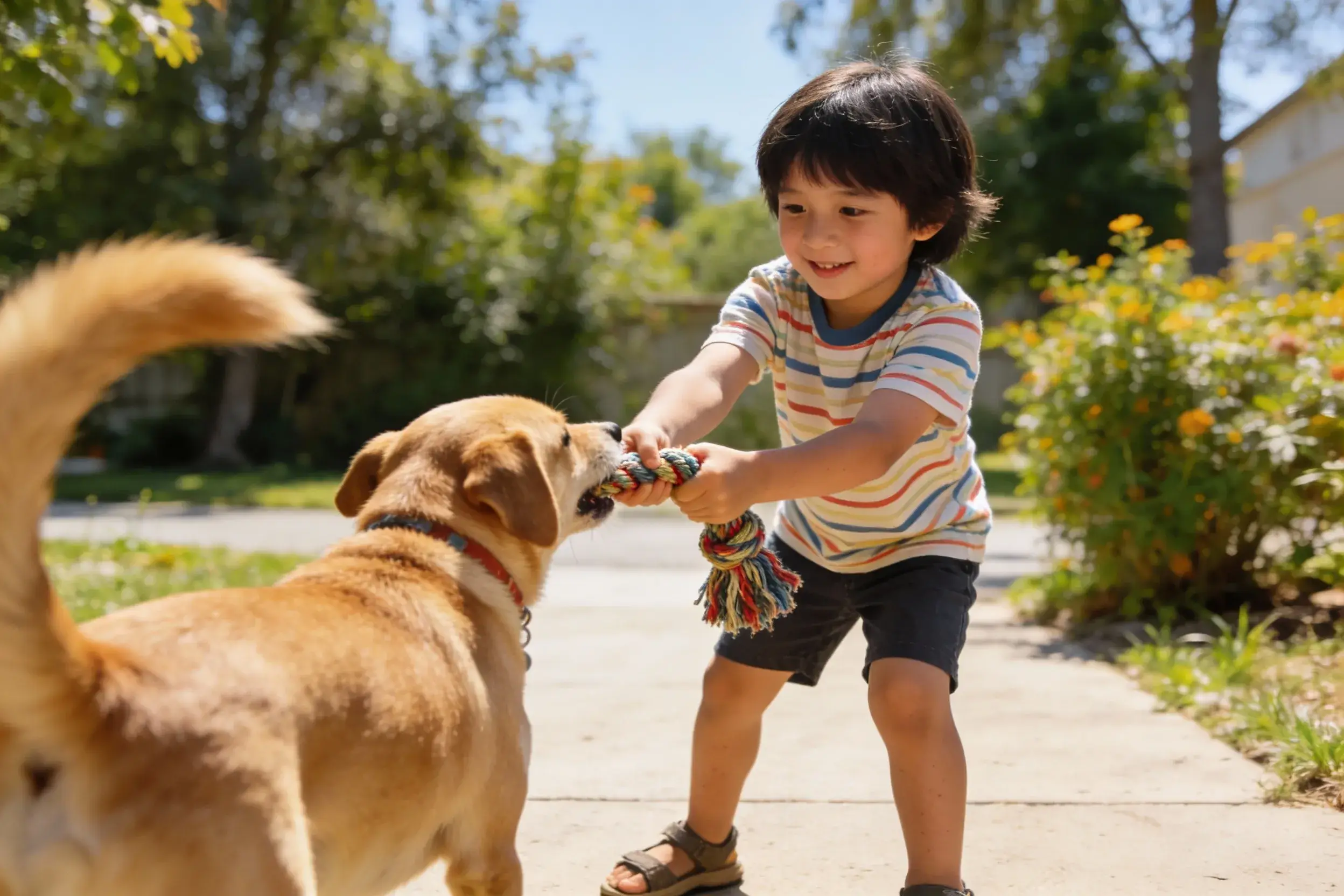
Debunking the Aggression Myth
Let’s be clear—tug-of-war does not create aggression in well-socialized dogs. Aggression comes from fear, poor boundaries, or pain, not from a game. The real problem is when owners let play get out of control or reinforce pushy behavior (like grabbing at hands or refusing to drop).
What actually works:
- Start and end the game on your terms.
- Teach a solid “drop it” or “give” cue.
- Step in if your dog’s excitement level gets too high.
What fails:
- Letting the dog decide when to start or stop.
- Playing with bare hands or unsafe objects.
- Ignoring signs of overstimulation (like fixated staring or grabbing for your wrists).
Rules of Safe Tug: Teaching Your Dog the Game
Safe tug needs structure. Here’s how to set up the game for success, even if your dog is a tug beginner:
1. Pick the Right Tug Toy
Not all toys are created equal. The best dog tug o war toy has:
- A comfortable, sturdy handle (save your fingers and wrists)
- Durable material (rope tug dog toy or reinforced rubber—avoid cheap plush)
- Length that keeps your hand away from the dog’s mouth (18 inches minimum for medium breeds)
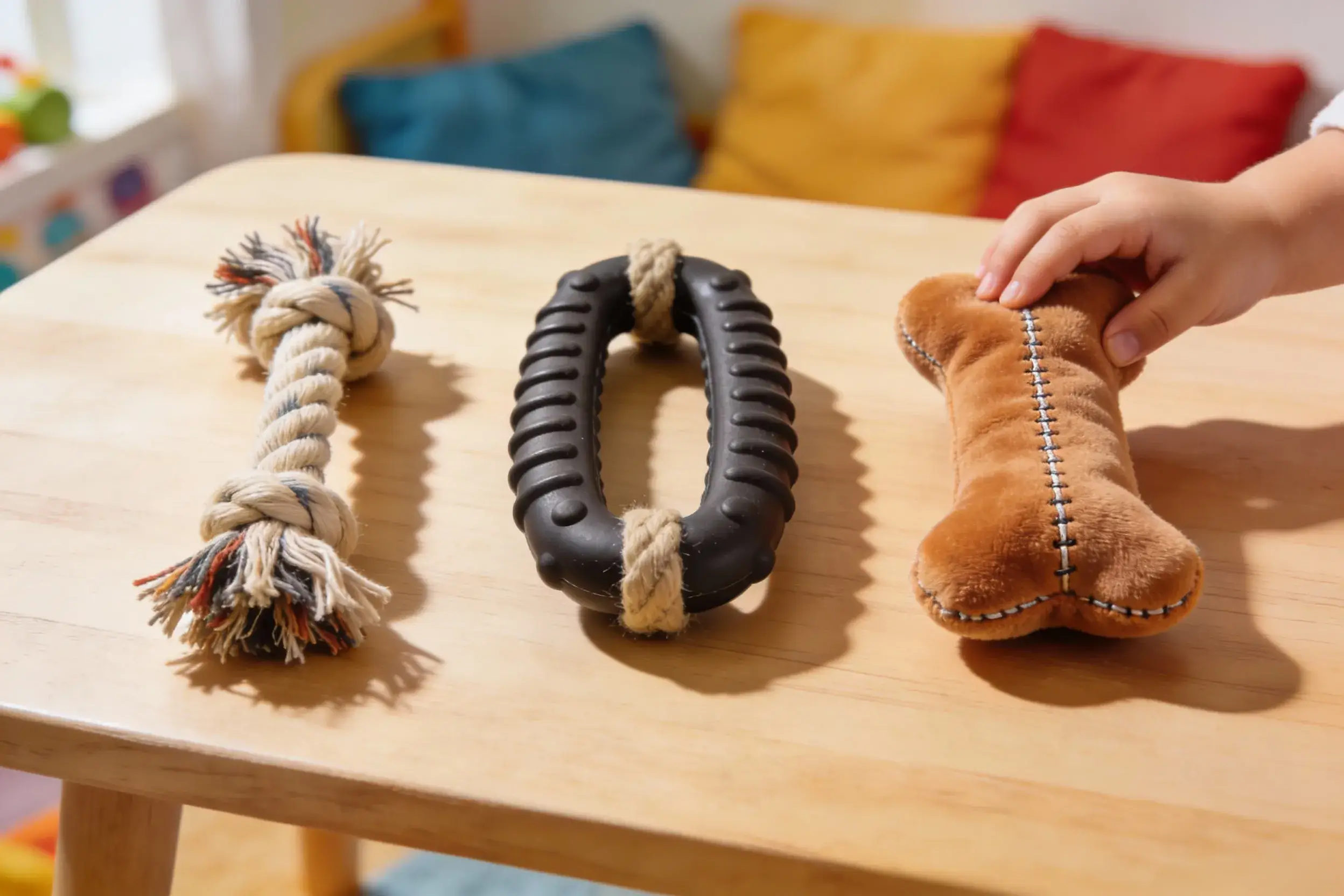
| Toy Type | Pros | Cons |
|---|---|---|
| Rope tug dog toy | Easy to grip, gentle on teeth | Can fray if chewed, needs replacement |
| Rubber tug toy | Tough, easy to clean | Can be heavy for small dogs |
| Plush tug toy | Soft, appealing | Short lifespan, not for power chewers |
2. Teach “Drop It” Before You Play
The secret to safe tug is a reliable release cue. Here’s a fast approach:
- Start with a low-value toy.
- Offer it, then present a treat near your dog’s nose.
- When your dog drops the toy for the treat, say “drop it” and reward.
- Gradually fade the treat, using only your voice.
- Practice until your dog drops on cue before you start real tug.
You should never have to pry the toy out of your dog’s mouth. If you do, go back to basics.
3. Set Boundaries Every Session
Decide the rules before you start. Common boundaries:
- Tug begins only when you cue “take it”
- Teeth on hands or clothing ends the game immediately
- Dog must drop the toy on command
Consistent rules teach your dog that tug is fun—but only when played politely.
4. Monitor Arousal Levels
Watch for signs of overstimulation: stiff posture, hard eyes, growling that escalates, or grabbing at your hand. If you see these, calmly stop the game and ask for a sit or down before resuming.
Choosing the Best Tug Toy: What Most Owners Miss
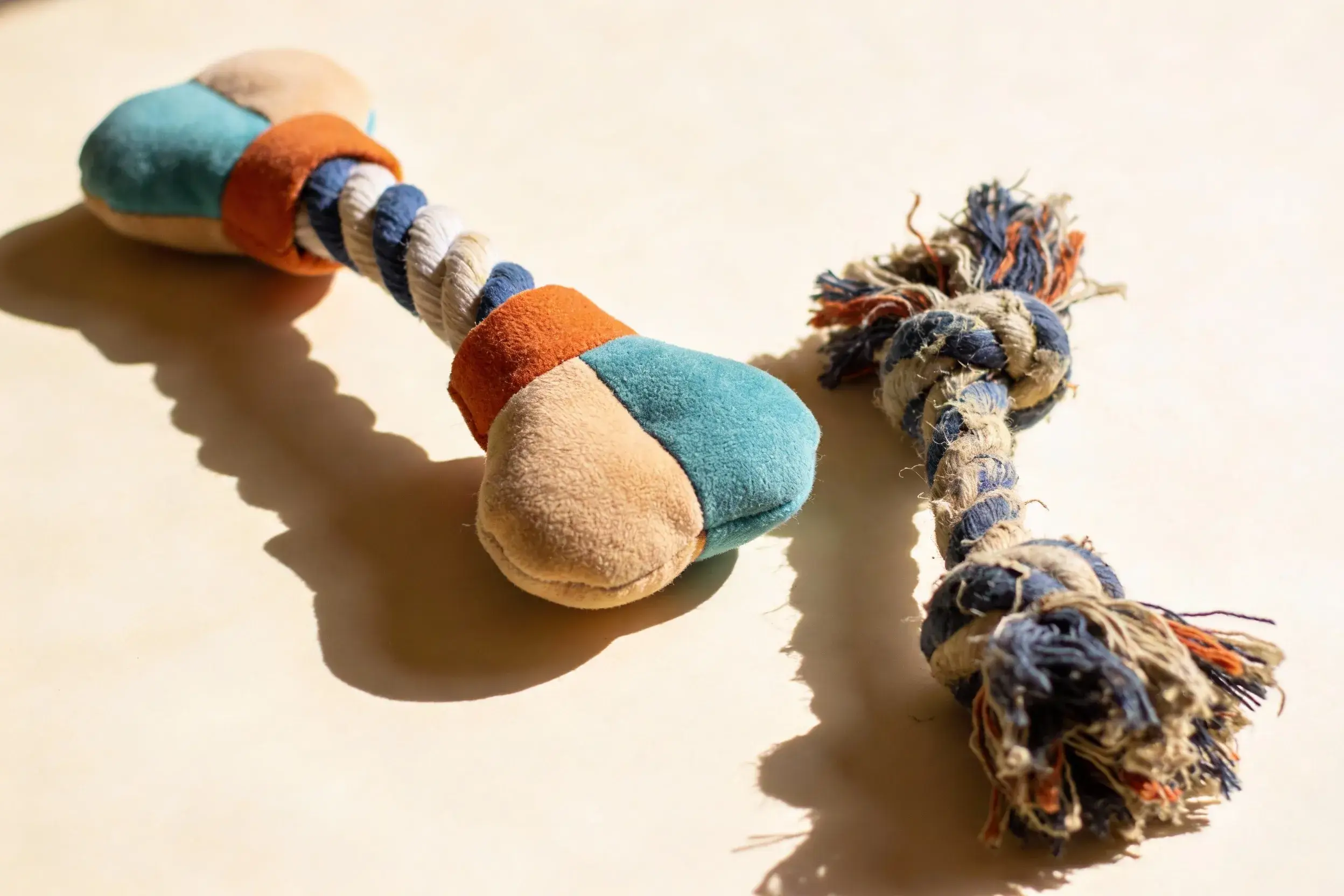
Many owners grab the first rope toy they see, but not all tugs are safe. Here’s what to look for (and what I’ve seen go wrong):
Must-haves:
- Handles that protect your hands (flat webbing or padded grips)
- Materials that won’t shred into choking hazards
- Size suited to your dog’s jaw (too small = risk of accidental bite)
Avoid:
- Thin ropes that burn palms or snap under pressure
- Toys that double as chew toys—chewing ruins the structure
- DIY toys with knots that can unravel
The right toy prevents injuries to both you and your dog. Comfort matters more than you think; I’ve seen owners give up tugging because their wrists hurt or the toy was too short.
Real-World Example: Teaching Tug Control
Consider this scenario: A young Labrador loves tug, but used to grab at clothing and refuse to let go. After switching to a longer, handle-equipped tug and practicing “drop it” daily, his owner saw huge improvements. Now, the dog waits politely for the tug cue and drops instantly when asked—no more accidental nips or torn sleeves.
What changed? Not just the toy, but the process:
- Consistent cues
- Immediate consequences for breaking rules (game pauses)
- Positive reinforcement for calm releases
This is repeatable with almost any dog, as long as you stick to the structure.
Common Mistakes and How to Avoid Them
Mistake: Using too short or flimsy a toy
Fix: Always use a tug o war dog toy with enough length and a sturdy handle.
Mistake: Letting the dog win by breaking rules
Fix: Stop the game the moment boundaries are crossed, then reset.
Mistake: Skipping the “drop it” training
Fix: Practice the release cue outside of play until fluent.
Mistake: Ignoring your dog’s signals
Fix: Watch for fatigue or frustration. End on a positive note—before either of you gets tired.
Key Takeaways: Tug-of-War with Safety and Assurance
Tug-of-war isn't just a safe game; it's a fantastic way to strengthen your relationship, instill self-discipline, and provide your dog with a healthy outlet for their energy. The secret lies in the details: select a safe, comfortable tug toy, establish clear rules, and make "drop it" a reliable command before you even begin the game.
When approached correctly, tug-of-war is a win for everyone: a happy dog, a confident owner, and no more fretting about misconceptions of aggression. Adhere to these guidelines, and you'll enjoy years of safe, enjoyable playtime with your dog.