

Interactive Reward Toys: Top Picks for Dog Training
Dog owners searching for the best ways to channel their pet’s energy and reinforce good behavior often overlook one crucial factor: not all dog training toys work the same way. This article helps you choose toys that motivate, reward, and accelerate real training progress—especially for dogs who need more than a simple ball toss.
We’ll explain the difference between play toys and training reward toys, share five trainer-endorsed picks, and offer advice for choosing based on size, breed, and activity level. If you want to make every training session count, keep reading.
Summary: Discover expert-recommended interactive reward toys for effective dog training—especially for high-energy dogs and those needing agility work. Learn what to use and why it matters.
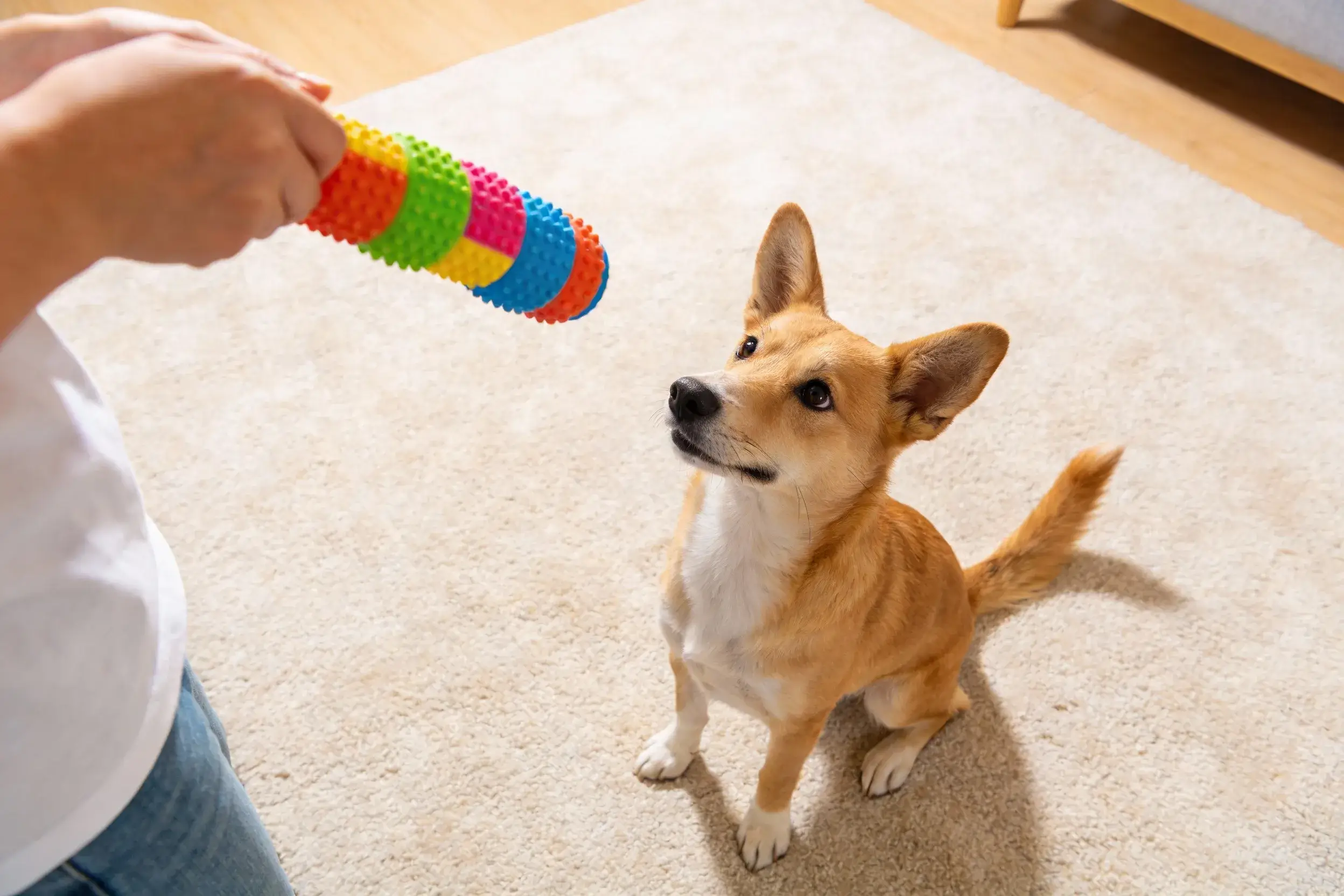
Why “Training Reward Toys” Are Not Just Playthings
Most dog owners start with the basics: balls, squeaky toys, plush animals. These are fun, but do they really drive learning? In practice, there’s a sharp divide between toys for play and toys that help you shape behavior.
Play Toys vs. Training Reward Toys
| Type | Purpose | Example |
|---|---|---|
| Play Toy | Entertainment, exercise | Plush squeaky |
| Training Reward Toy | Reinforce desired action | Ball on string |
Play toys keep a dog busy. Training reward toys, by contrast, are tools. They’re used during focused sessions to mark and reward a specific behavior. The difference is intent and timing. Give a ball at the wrong moment, and you lose the chance to reinforce “sit” or “come.” Use a tug or ball-on-string strategically, and you build strong, repeatable habits.
Many owners miss this distinction, leading to confused dogs and slower progress. If you want reliable obedience or agility, reward toys must be used with purpose.
The 5 Trainer-Recommended Interactive Reward Toys
Let’s get practical. Here are five interactive toys that top trainers (and experienced owners) reach for—especially with high-energy breeds or dogs in agility classes.
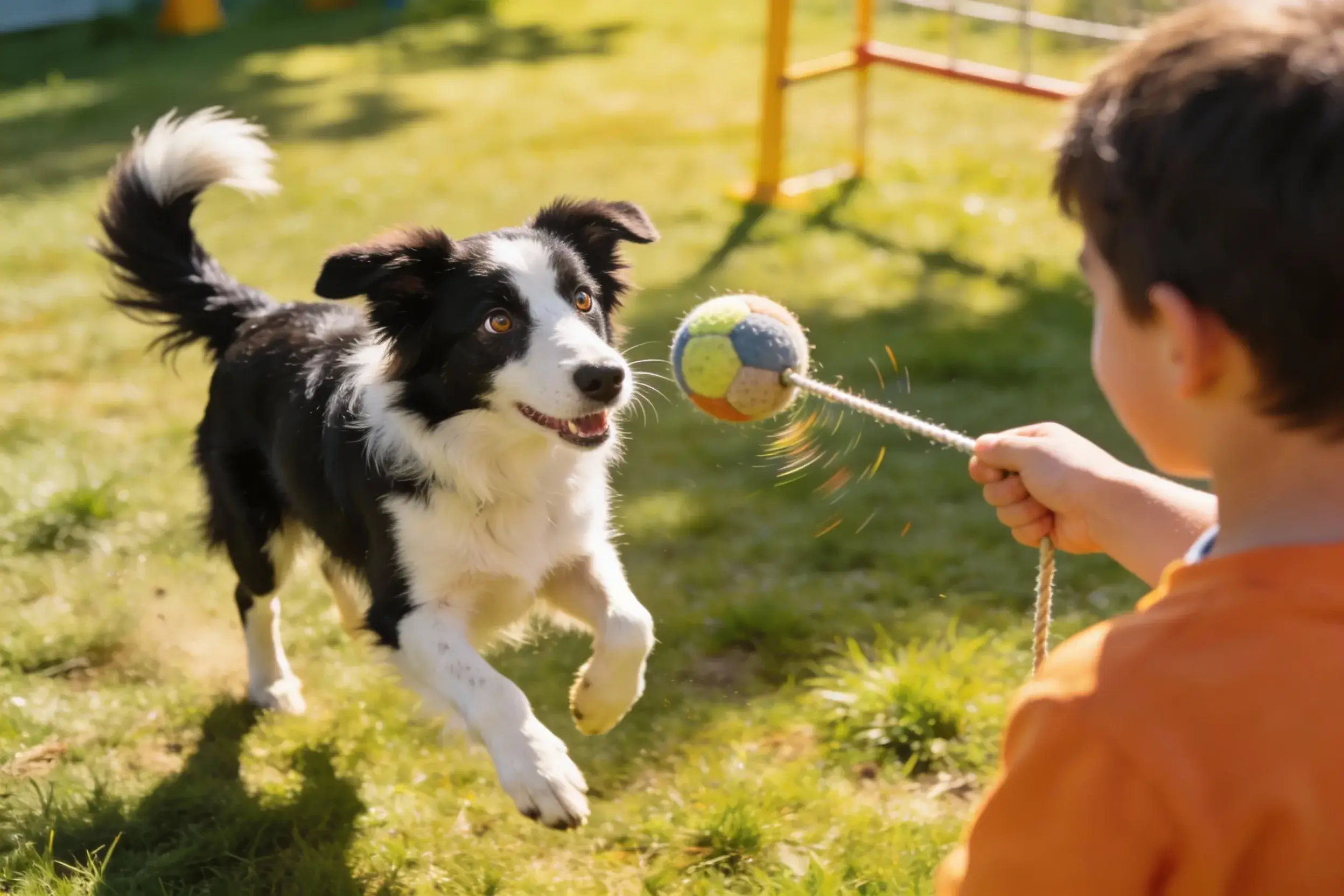
1. Ball on a String: Precision and Portability
A ball on a string is a staple in reward-based training. Unlike loose balls, the string lets you control when and how the reward is given. It’s ideal for recall, agility direction changes, and impulse control.
Why it works:
- Allows instant reward delivery at a distance
- Prevents dogs from running off with the toy
- Great for dogs who are obsessed with fetch
This is my go-to for high-drive dogs who need a quick, exciting payout. It’s also safer for indoor use since you don’t have flying projectiles bouncing around.
2. Bite Tugs: Channeling Drive for Agility and Obedience
Bite tugs (short, sturdy fabric or leather strips with handles) are used by professional trainers to build focus, strengthen grip, and reward without food. For agility, they help mark correct runs or fast recalls.
What sets them apart:
- Engage mouth and prey drive
- Requires teamwork—dog must bring it back for more play
- Durable, suitable for strong-jawed breeds
I recommend bite tugs for German Shepherds, Malinois, and any dog with a strong tugging instinct. They’re a must for advanced obedience and agility work.
3. Treat-Dispensing Puzzle Toys: Mental and Physical Engagement
Treat-dispensing toys like the Kong Wobbler or Bob-a-Lot combine food motivation with a puzzle challenge. They’re excellent for training calmness, patience, and problem solving.
Best uses:
- Teaching “settle” or independence
- Slowing down fast eaters
- Rewarding while keeping the dog busy
For dogs who lose interest in plain toys, a food puzzle can reignite motivation. However, don’t use them as a substitute for interactive play in high-energy training sessions—they lack the speed and excitement of a tug or ball.
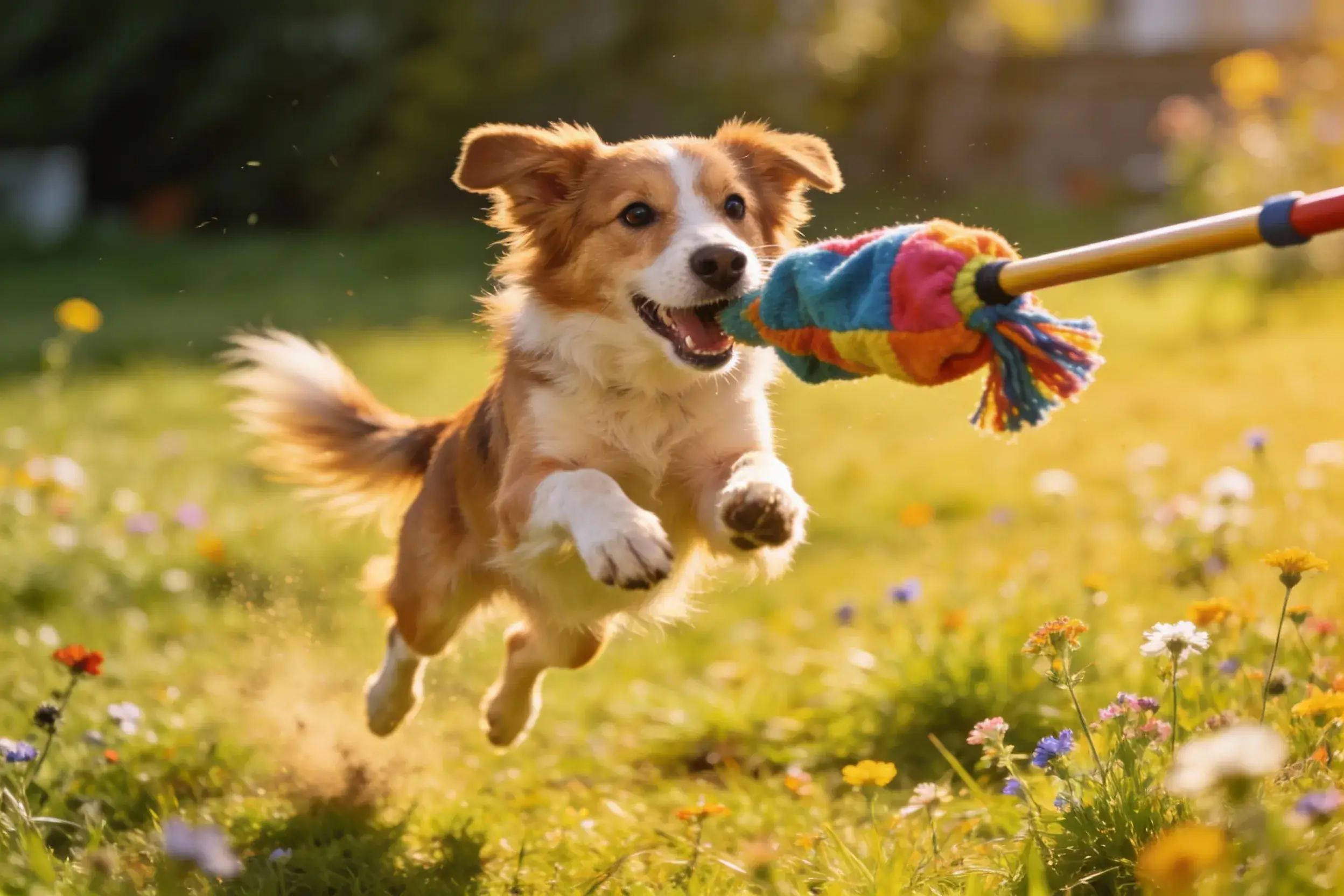
4. Flirt Poles: Controlled Chase for High-Energy Dogs
A flirt pole is essentially a lure on a stick—like a giant cat toy for dogs. It lets you simulate prey movement, burn off energy, and practice impulse control in a small space.
Why trainers use it:
- Great for dogs who love to chase
- Excellent for training “wait” and “release” cues
- Can be used even with limited mobility (for owner or dog)
Flirt poles are especially popular with terriers, herding breeds, and young, athletic dogs who need an outlet for chasing instincts. Used correctly, they teach boundaries as well as speed.
5. Squeaky Tug Toys: Multi-Sensory Rewards
Combining noise with tug action, these toys appeal to dogs who respond to both sound and movement. The squeak adds an extra layer of excitement, which can help with stubborn or distracted dogs.
Where they shine:
- Training in distracting environments
- Reinforcing recall or focus
- Suitable for small and medium breeds
For anxious dogs, the familiar squeak may provide comfort during training in new places. Just ensure the toy is sturdy—cheap squeaky toys often fall apart under real tugging.
What many dog owners miss is the importance of matching the toy to the dog.
Training often falters because the dog's motivation isn't aligned with the toy. A "high-energy dog toy" isn't a one-size-fits-all solution. Here's a simple guide:
- Dogs driven by prey instinct: Consider a ball on a string, a flirt pole, or a tug toy.
- Food-motivated dogs: Treat-dispensing puzzles can be effective.
- Breeds with strong jaws: Heavy-duty tug toys are a good choice.
- Small breeds: Lightweight squeaky toys are usually best.
Remember, breed, age, and energy level all factor in. A Border Collie, for instance, might thrive on chase and tug games, whereas a Basset Hound might prefer food puzzles. Always keep an eye on your dog's excitement level; the goal is to enhance focus, not to encourage frantic or potentially dangerous play.
Choosing the right toy for your dog, whether it's for agility training or just a reward, involves a few key considerations.
First, think about durability. Will it survive your dog's enthusiastic chewing? Size matters, too. You want something small enough for them to carry, but not so small that it poses a choking hazard. The material is also important; steer clear of toys with toxic dyes or flimsy stitching.
Consider the toy's intended use. Is it for playtime, or are you using it to mark a specific behavior?
Try out a few different toys and watch how your dog reacts. What gets a Labrador excited might not do much for a sighthound. The ideal toy should help your dog concentrate, not just expend energy.
Takeaways for Dog Owners
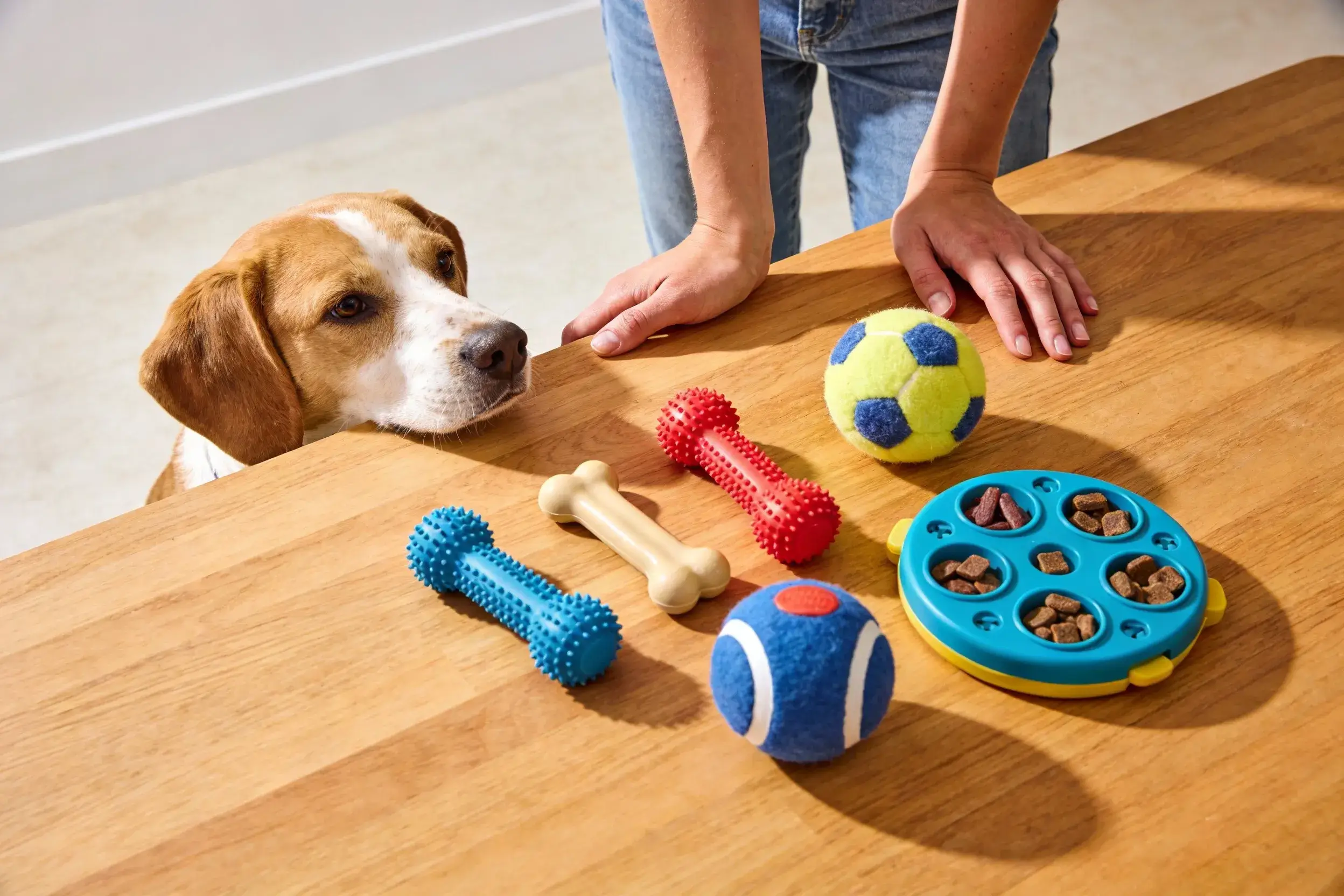
Interactive reward toys offer more than just a way to pass the time; they're effective training aids when used thoughtfully. The recommended toys—ball on string, bite tugs, treat puzzles, flirt poles, and squeaky tugs—each have a distinct function. The trick is to select the toy that aligns with your dog's natural tendencies, your training objectives, and the specific behaviors you're aiming to encourage.
Make your selection carefully, monitor the outcomes, and be prepared to adapt. The right training reward toy can turn a distracted dog into an eager collaborator, one training session at a time.