

Beyond Tennis Balls: Top Fetch Toys for Dogs
When it comes to playing fetch, most people grab a tennis ball and call it a day. But for dog owners looking for durable, safe, and arm-saving options, a wider world of dog fetch toys exists—some designed to go farther, protect your dog's teeth, and keep playtime injury-free for humans, too. This guide helps owners choose the best dog toys for fetch, especially if you want to avoid sore shoulders and worn-out tennis balls.
Summary: Discover durable fetch toys beyond tennis balls, covering frisbees, launchers, and rope balls, plus which materials protect your dog’s teeth and your throwing arm.
Why Tennis Balls Aren't Always the Best Fetch Toy
Tennis balls are the go-to choice for a reason: they're inexpensive, they bounce, and they're simple to toss. But here's what many pet owners overlook:
- Tennis balls don't last long, particularly if your dog is a heavy chewer.
- The rough felt can, over time, harm your dog's teeth.
- Their design and weight restrict how far you can throw them before your arm starts to ache.
If you've ever left the park with a sore arm—or a tennis ball that's been demolished after one outing—you understand the drawbacks.
Frisbees, Ball Launchers, and Rope Balls: What Actually Works
Frisbees, those flying discs, are a hit with dogs that love to run. They soar farther than your average ball, which is why they're so popular with the more active breeds. However, not every disc is a winner. A few things are worth considering:
- Material: Soft rubber or foam is best; it won't damage teeth or gums. Hard plastic, on the other hand, can crack or cause injury.
- Weight: Heavier discs tend to fly straighter in the wind, but they might be a bit much for smaller dogs.
- Design: Some discs are specifically designed for dogs—flexible and puncture-resistant—while others are just the standard human kind.
Why does this matter? A good, dog-friendly frisbee will last longer, be safer for your dog's mouth, and allow you to throw it farther with less effort.
“A rubber disc like the West Paw Zisc lets me throw for distance, and I’ve never seen tooth wear or bleeding gums after months of play.”

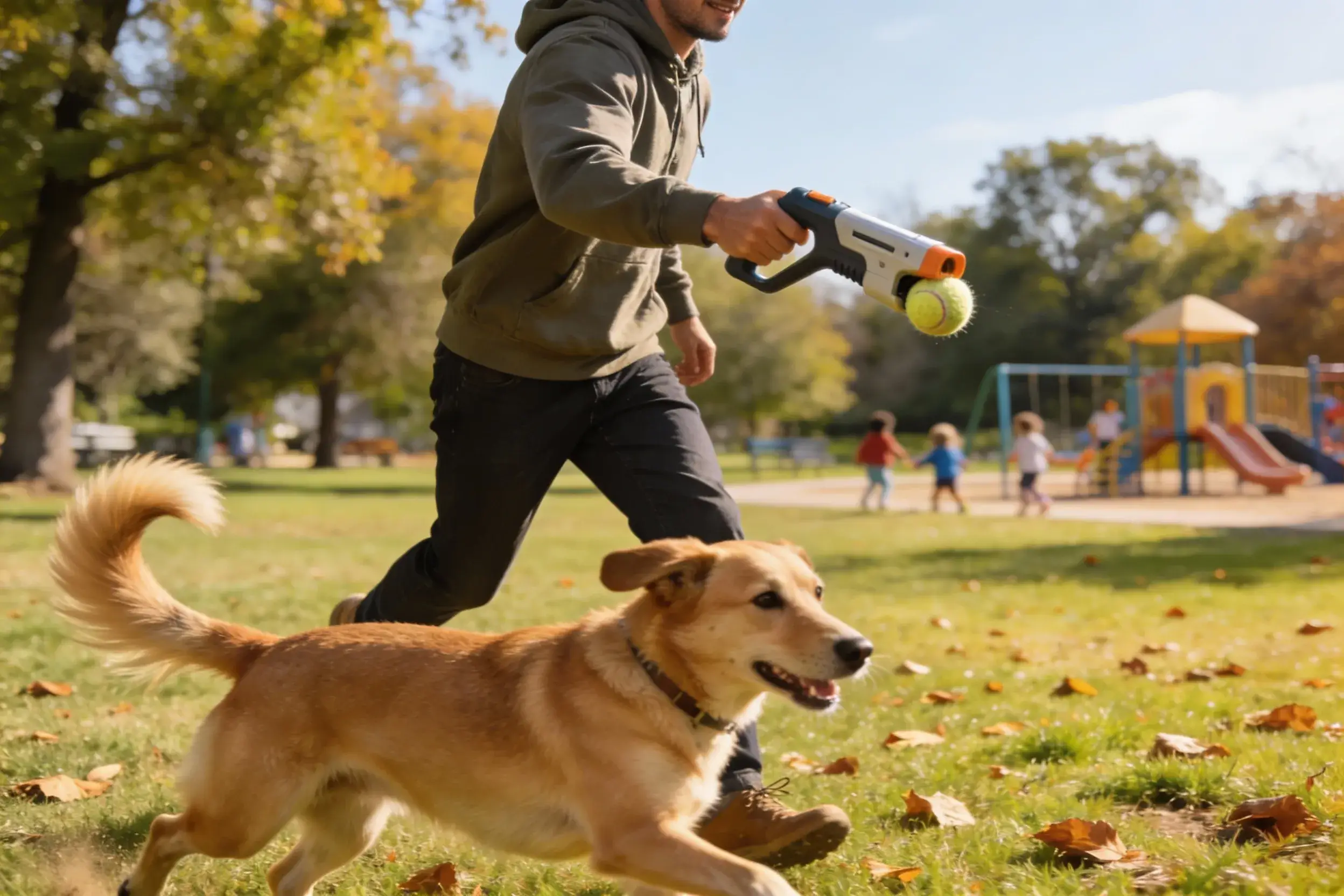
Ball launchers: they might seem like a novelty, but they're practically a necessity at dog parks, and for good reason.
Distance is the first advantage. They can easily double or even triple how far you can throw a ball. Then there's consistency; these launchers send the ball in a straight, predictable path, which is fantastic for training. And let's not forget hygiene – no more dealing with slimy, slobbery balls.
Just a heads-up: not all launchers are compatible with all balls, so always check before you buy.
My take? If your dog needs to burn off energy, this is the easiest way to do it without ending up with a sore arm. The Chuckit! launcher is a classic, affordable, and built to last.
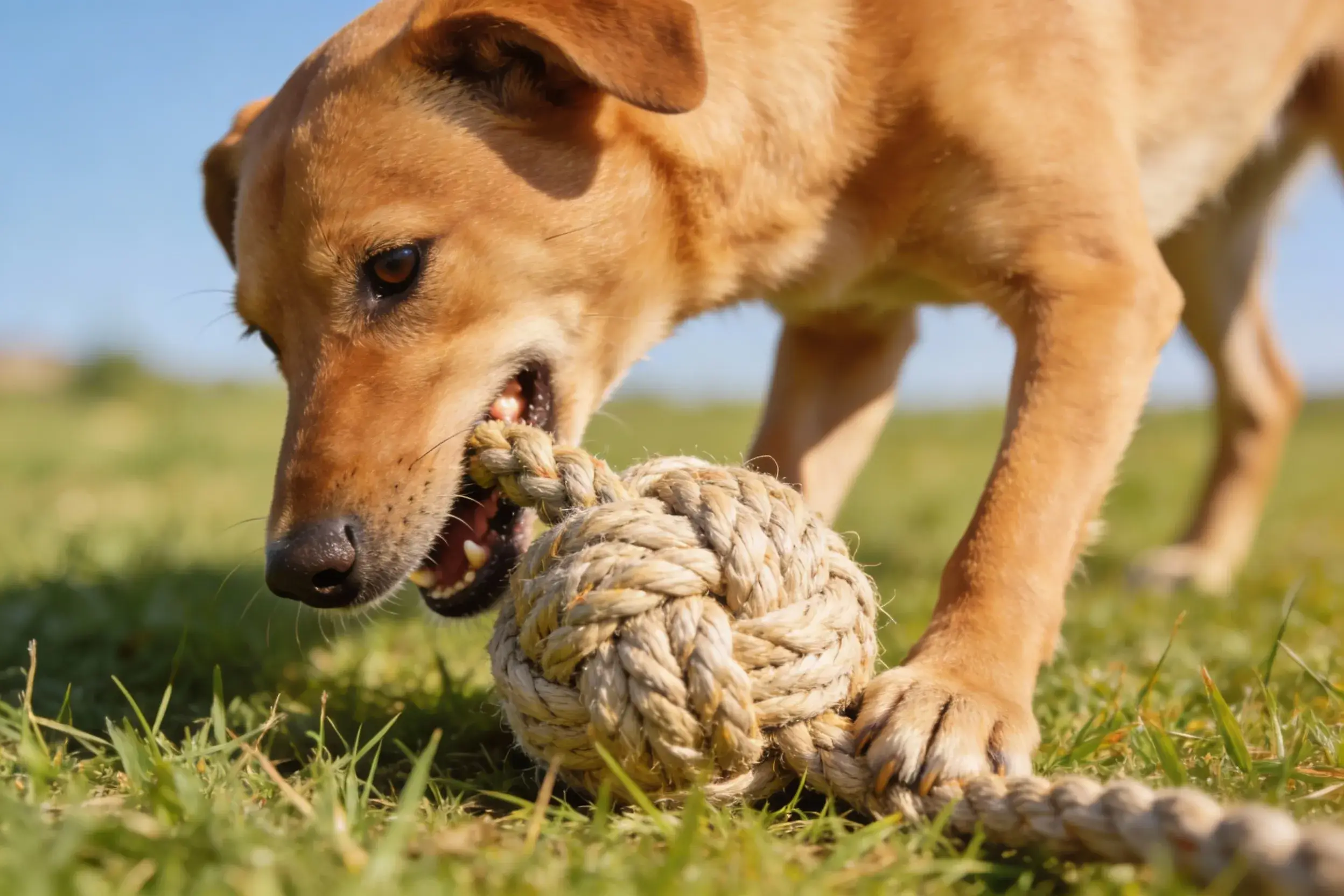
Rope balls: perfect for tug-of-war and long throws.
Rope balls offer the best of both worlds: the thrill of a good fetch and the tugging fun of a game. Here's why they're worth considering:
- Distance: You can really launch them, particularly the bigger, heftier ones.
- Longevity: A well-made rope ball will survive a lot of chewing, far longer than those made of felt or foam.
- Dental benefits: The rope itself can help remove plaque, though it's no replacement for a proper brushing.
What to watch out for: Poorly made rope balls come apart quickly and could be a choking hazard if your dog swallows pieces. Stick with tightly woven, large-knotted designs.
Material Safety: Foam vs. Rubber for Teeth Protection
Many owners don’t realize that the wrong material can do real damage (I’ve seen chipped teeth from hard plastics and worn enamel from abrasive surfaces).
Here’s a direct comparison:
| Material | Pros | Cons | Best For |
|---|---|---|---|
| Foam | Soft, gentle on teeth | Can be punctured, not for chewers | Puppies, light fetchers |
| Rubber | Durable, bouncy, teeth-safe | Heavy chewers may shred low-grade | Most active fetch sessions |
| Hard Plastic | Flies far, easy to clean | Can chip teeth, slippery | Advanced fetch, non-chewers |
| Rope (Cotton) | Good grip, teeth cleaning | Frays over time, ingest risk | Tug-and-fetch enthusiasts |
Key takeaway: For most fetch games, tough rubber (not too hard) strikes the right balance between durability and dental safety. Avoid standard tennis balls and hard plastic if your dog chews aggressively.
What many dog owners miss is the crucial step of matching the right toy to their dog and the specific playtime scenario.
The most common error? Grabbing a "tough" toy without considering your dog's mouth, how they play, or even your own throwing skills.
- Active retrievers: They need something that soars—think discs or balls designed for launchers.
- Small breeds: Lightweight, soft foam balls are best to avoid straining their jaws.
- Chewers: Only heavy-duty rubber or professional-grade rope will stand up to them.
Consider these questions:
- How far do I want to throw the toy?
- Does my dog prefer to chew or just chase?
- Am I playing on grass, sand, or near water?
Don't forget about the weather. Wet, muddy parks can make certain toys, like rope, heavy and difficult to clean.
Choosing the Best Dog Toys for Fetch: Decision Framework
To find the right fetch toy, follow this process:
Assess your dog’s bite strength.
- Light chewers: Soft foam or flexible rubber.
- Power chewers: Dense rubber or tough rope.
Decide on your play environment.
- Open fields: Frisbees and launchers.
- Small yards: Rubber balls or short-throw rope balls.
Factor in your own comfort.
- Shoulder or elbow issues? Use a launcher or lightweight disc.
- Prefer less bending? Launchers keep you upright.
Check for dental safety.
- Avoid hard plastics and abrasive surfaces.
- Look for “teeth safe” labels or vet endorsements.
Actionable Takeaways
Forget the tennis balls for your daily game of fetch; rubber, foam, and rope toys are better bets, offering both safety and longevity. Ball launchers and dog-specific discs allow for longer throws without straining your arm. Always consider the material's safety: soft rubber often strikes the ideal balance between durability and protecting your dog's teeth. Choose a toy that suits both your dog's play style and your own throwing abilities.
Fetch is about more than just a quick toss. The right equipment translates to more enjoyment, reduced risk, and a healthier dog—and a happier human arm.