

Blue Dog Toys: Enhancing Your Dog's Play Experience
Why Blue Dog Toys Matter: The Hidden Science Behind Color
Dog owners frequently encounter a straightforward, yet often ignored, issue: their dogs struggle to locate toys scattered in the grass. Those red, orange, or green balls? They vanish almost immediately. The explanation isn't mere coincidence; it's tied to your dog's distinctive vision. This guide is designed for anyone who wants their dog to relish playtime without the hassle—particularly those selecting toys for dogs with specific sensory needs.
Blue dog toy options aren't just a passing fad; they're a scientifically supported answer. If you want your dog to chase, retrieve, and stay engaged for longer periods, selecting the right color toy can make all the difference. This piece explores why blue is a standout color for dogs and suggests five of the best blue toys, chosen for their lasting quality and play value.
Dogs perceive their surroundings quite differently than we do. Blue toys are the most visible, making them easier for dogs to spot against a backdrop of grass or dirt. Selecting a blue toy isn't about looks; it's about giving your dog the best chance to enjoy their playtime.
Understanding Canine Color Vision: A Two-Color Perspective
Many people think dogs see in black and white, but that's not accurate. Dogs are dichromats, meaning they primarily see two colors: blue and yellow. The canine retina contains two types of color-sensitive cells, or cones, unlike humans, who have three. This disparity is the crux of color confusion.
Here's the situation:
Humans perceive a broad spectrum: red, orange, yellow, green, blue, and violet. Dogs, however, have a more limited view, primarily seeing blues and yellows. Reds and greens appear as variations of brown or gray to them.
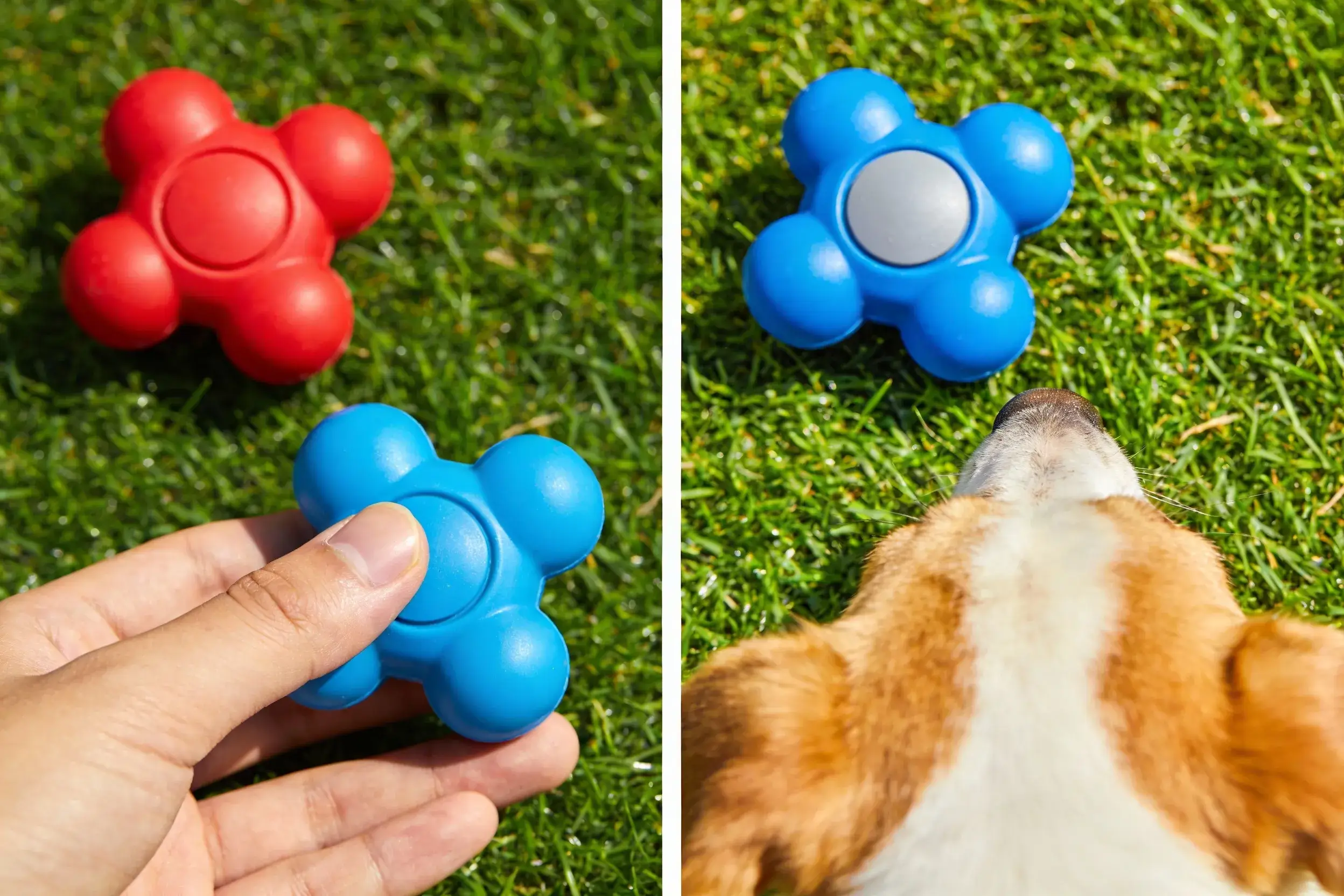
Consequently, if you toss a vibrant red ball into a green yard, it essentially disappears against the grass from your dog's perspective. It's not a matter of distraction; they simply can't discern the difference.
What Most Owners Miss
Many toys marketed to humans rely on our color preferences, not the dog’s needs. Pet stores brim with neon reds, oranges, and greens. But your dog sees these as drab, muddy hues—nothing like the bold colors you see. The result? Dogs lose interest, or worse, can’t find the toy at all.
Why Blue Toys Stand Out on Grass
Let’s get practical. Imagine standing in a yard with a handful of toys:
- Red ball on green grass: to you, it pops. To your dog, it’s dull gray.
- Blue ball on green grass: to you, it’s visible. To your dog, it’s the brightest thing in sight.
What’s happening? Dogs’ blue cones respond strongly to blue wavelengths, making blue toys almost glow against natural backgrounds.
Comparison Table: Toy Colors and Canine Visibility
| Toy Color | Human Perception | Dog Perception | Visibility on Grass |
|---|---|---|---|
| Red | Vibrant | Gray/Brown | Poor |
| Orange | Bright | Dull Yellow | Fair |
| Green | Lively | Gray | Poor |
| Blue | Distinct | Vivid Blue | Excellent |
Source: Canine color vision research, University of California, 2013
Why This Matters
When your dog loses interest in fetch, it's frequently because they can't find the ball. Blue toys are the answer. They're easier to see, which means longer, more enjoyable playtime and less frustration for everyone involved.
Best Color for Dog Toys: Is Blue Always the Best Choice?
The quick answer: blue is the clear winner for outdoor play. Indoors, where the surroundings are more complex, both high-contrast blue and yellow toys are effective. However, there are some compromises.
- Blue toys: Ideal on green grass, brown dirt, and sand.
- Yellow toys: Work well indoors or on blue or gray floors.
- Red, green, or orange toys: Often blend in and become invisible to dogs on grass or dirt.
The idea that red toys are inherently exciting for dogs is a misconception, a product of clever advertising. What appeals to us doesn't necessarily translate to what a dog finds engaging.
The Best Blue Dog Toys: Toughness and Visibility Combined
Not every blue toy is built to last. Some are too pliable, while others quickly succumb to wear and tear. For dogs that are either sensitive to stimuli or have a lot of energy, a toy's ability to withstand use is essential.
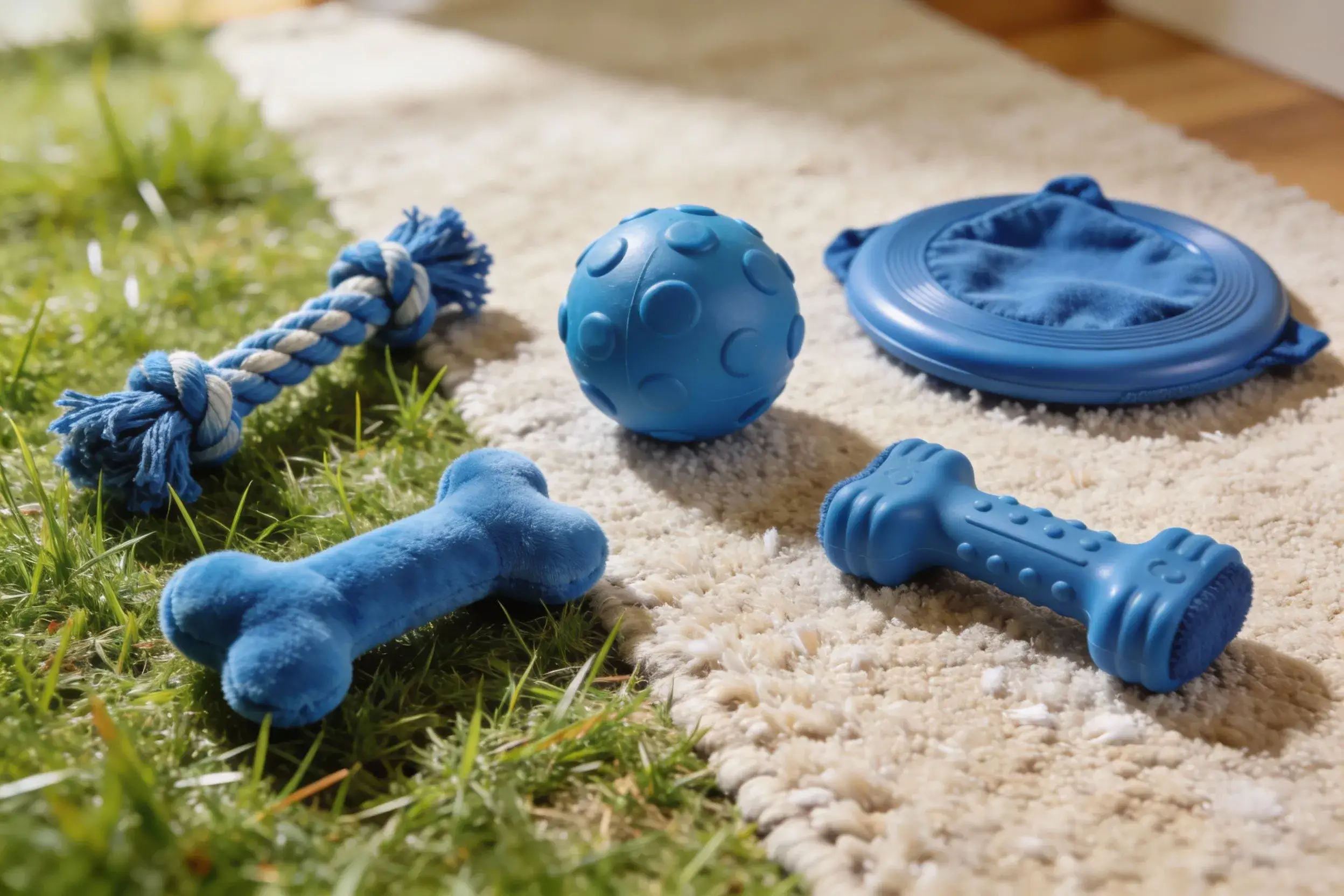
Here are five blue dog toys that offer both visibility and durability:
KONG Classic Blue
- Made from ultra-durable rubber, perfect for aggressive chewers
- Bounces in unpredictable ways, keeping dogs entertained
- Safe for the dishwasher
Chuckit! Ultra Ball (Blue Edition)
Floats in water and is easy to spot on grass.
High bounce, perfect for those who love to play fetch.
Constructed with a thick rubber shell.
- West Paw Zogoflex Hurley (Blue) Flexible but built to last; safe for chewing.
Made from recyclable, non-toxic materials.
Also works well as a tug toy.
- Nylabone Power Chew (Blue) Made for aggressive chewers.
Textured to promote dental health.
Infused with long-lasting flavor.
- Outward Hound Invincibles Snake (Blue/Yellow) Features multiple squeakers for sensory play.
Minimal stuffing means less mess.
Seams are reinforced for added durability.
What to Consider When Choosing a Blue Dog Toy
Look for toys made from tough materials like rubber, nylon, or reinforced fabric. The size should be right for your dog's breed and how strong their bite is. Simple shapes are best; they're easier for your dog to pick up and carry around. And, of course, the toy should be easy to clean, ideally machine washable.
Don't get sidetracked by gimmicks or overly cute designs. Dogs are more interested in how things look and feel, not how they appear to us.
Overlooked Considerations: Sensory Needs and Special Circumstances
Some dogs have trouble seeing, get anxious, or are sensitive to certain things. For these dogs, blue toys are especially important. They can help prevent frustration and encourage independent play.
If your dog is older, has low vision, or gets stressed out when looking for toys, a blue one is a good choice. Adding a scent, such as peanut butter or a treat tucked inside a blue KONG, can be beneficial.
Actionable Takeaways: Make Playtime Visible, Fun, and Frustration-Free
- Dogs are best at seeing blue and yellow; red and green toys tend to vanish in grass.
- For outdoor play, blue dog toys are much easier for your dog to find, which cuts down on frustration and lost toys.
- Select toys that are both visible and durable—consider blue versions of toys you know hold up well.
- Dogs that are sensitive to sensory input or have vision impairments gain the most from high-contrast toys.
- Don't get swayed by marketing color trends; always put your dog's sensory experience first, even if it means sacrificing your own aesthetic preferences.
Rethinking toy color isn't just a small change—it's a key way to enhance your dog's playtime and daily enrichment. If you want your dog to love every game of fetch, start with blue.